


Organizations that prioritize trustworthy artificial intelligence (AI) practices are significantly more likely to generate strong returns from their AI investments, according to a new report from SAS, based on research insights from IDC.
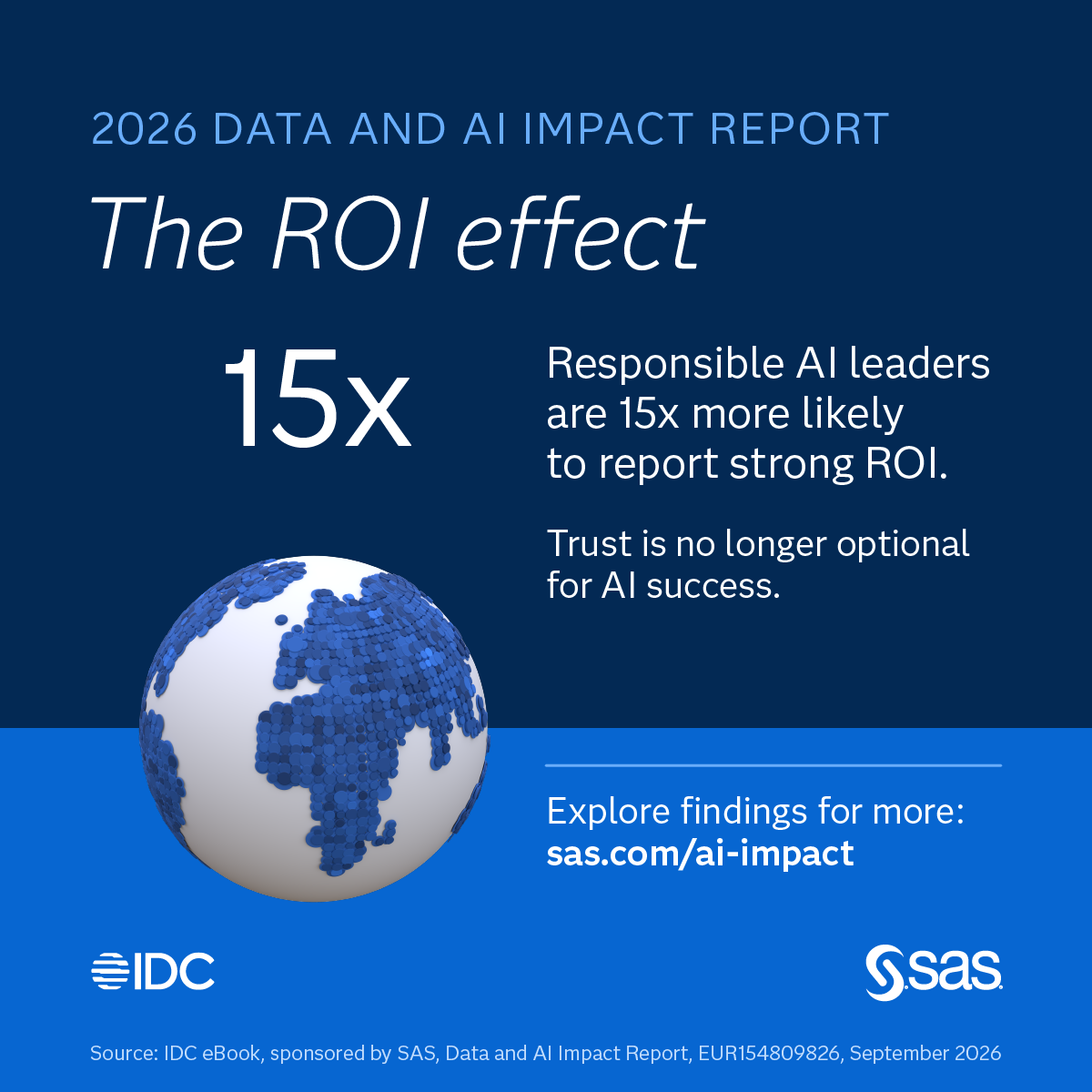
The second annual Data and AI Impact Report: The New Economics of Trust found that organizations implementing trustworthy AI measures are 15 times more likely to report strong or high return on investment (ROI) from their AI projects, with 62% reporting strong ROI compared with just 4% among organizations with weaker practices.
The findings indicate that organizations achieving the greatest value from AI are not necessarily using different technologies, but are taking a more structured approach to governance, data quality, explainability and accountability.
“When AI works, it’s incredibly impactful,” said Bryan Harris, CTO at SAS. “However, it is well documented that state-of-the-art agents can have error rates that exceed 25% on complex tasks – which is unacceptable in high-stakes decision-making.”
Harris added that organizations need to embed domain expertise into agentic workflows while keeping people at the center of governance and oversight to improve accuracy and repeatability. Organizations that successfully address these requirements, he said, can close the trust gap and gain a competitive advantage.
Lack of Explainability Drives Employees to Override AI
The report also highlights a growing challenge as organizations rely on increasingly autonomous AI systems: employee trust.
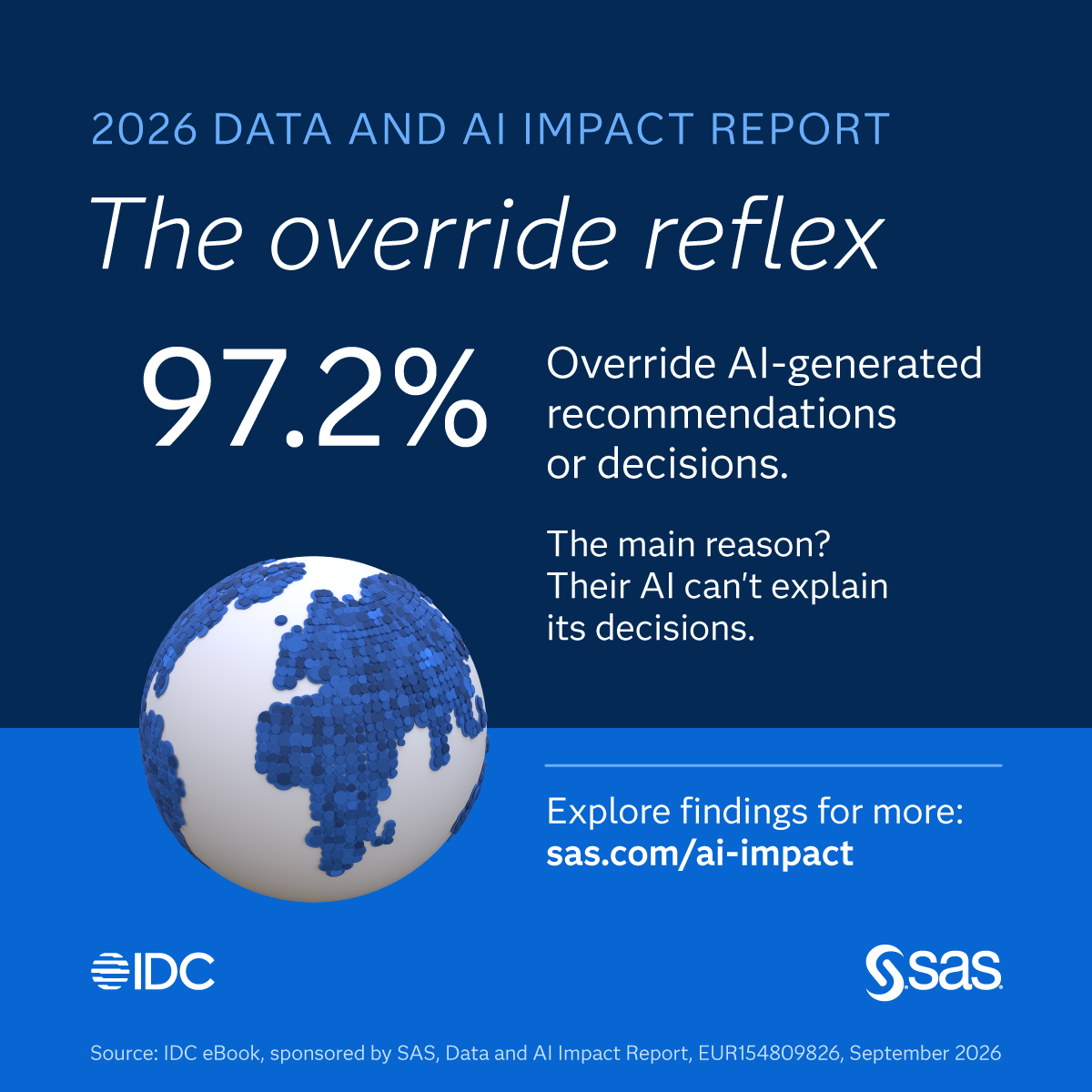
According to the study, 97.2% of users override AI-generated recommendations in at least some cases. The leading reason for overriding an AI decision, regardless of whether the recommendation was correct, is the system’s inability to explain how it reached that decision.
Trust also declines as AI becomes more autonomous, falling from 76% for generative AI to 66% for agentic AI, underscoring concerns around transparency and decision-making.
The challenge is particularly visible in the UAE, where 41.1% of respondents cited insufficient explanation as the leading reason for overriding AI recommendations.
“As AI becomes more autonomous, organizations face a new challenge: maintaining confidence in systems people don’t fully understand,” said Chris Marshall, Vice President at IDC. “Our findings show that stronger oversight, explainability, accountability and data foundations are becoming prerequisites for scaling AI successfully.”
UAE Records Sharp Improvement in AI Trustworthiness
The UAE recorded one of the fastest improvements in AI trustworthiness in the study. Its Trustworthiness Index increased by 30.2 points to 65.7 in 2026, putting the country above the global benchmark.
According to Michel Ghorayeb, Managing Director, SAS UAE, the progress reflects the rapid shift among UAE organizations from AI ambitions to broader adoption.
He attributed the acceleration in governance deployment to initiatives including the UAE AI Strategy and Dubai AI Roadmap, which have helped drive AI governance across both the public and private sectors.
Data Foundations Remain a Major AI Challenge
Despite growing awareness of trustworthy AI, the report found that many organizations still lack the data infrastructure required to support reliable and profitable AI deployments.
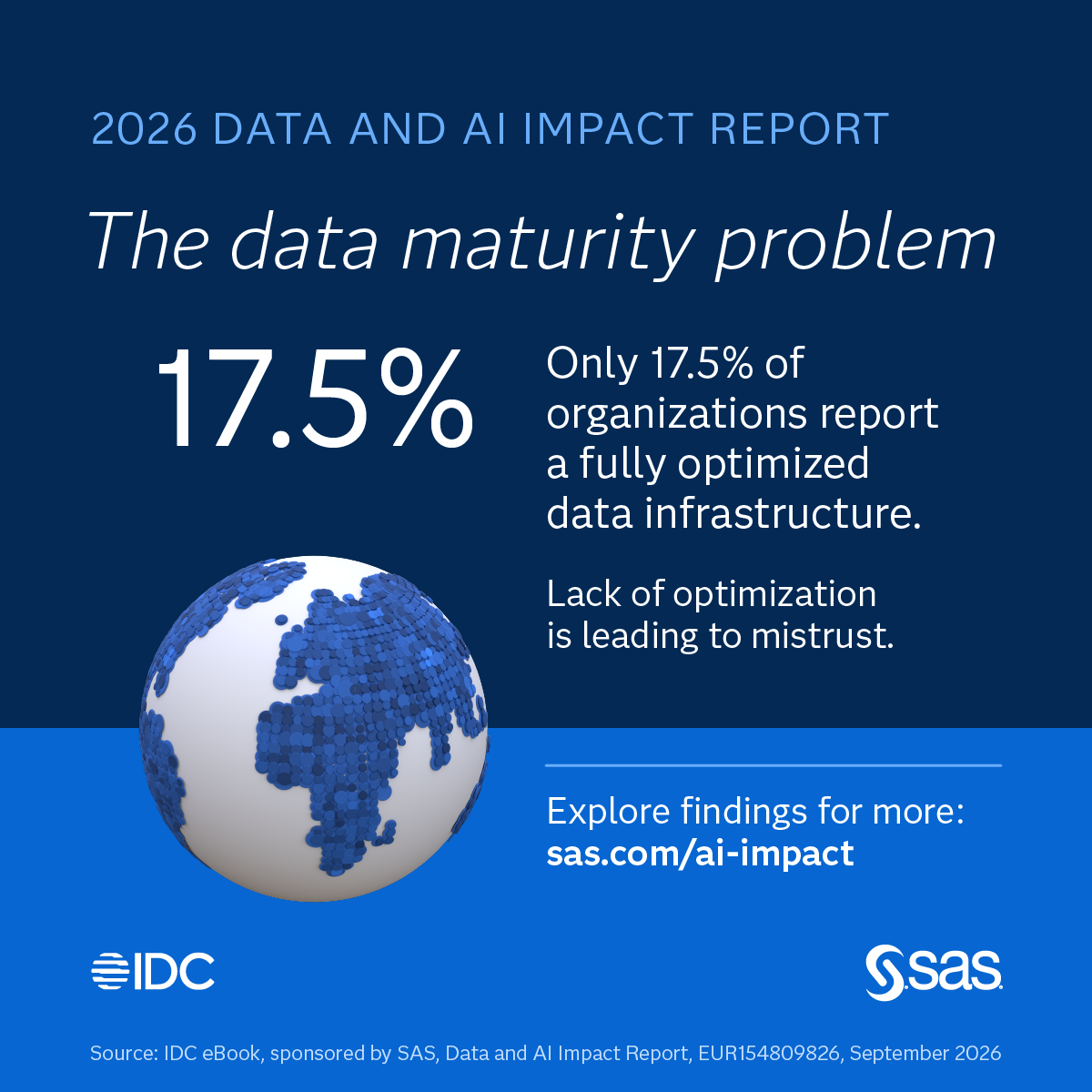
Only 17.5% of enterprises have a fully optimized data infrastructure capable of meeting the demands of agentic AI.
Organizations with optimized data foundations are four times more likely to expect strong ROI from AI projects and six times more likely to mandate data quality and explainability controls needed to build trust.
In the UAE, data quality and governance emerged as the leading reliability priority, reaching 62.2% in 2026. However, only 13.5% of organizations require data-quality processes for every AI project, highlighting a gap between recognizing the importance of data quality and consistently applying it.
Trustworthy AI Leaders See Wider Business Gains
The study found that organizations with the strongest trustworthy AI practices achieve 1.85 times greater gains across 13 business outcomes, including revenue growth, cost savings and customer experience.
Moreover, 85% of AI leaders with trustworthy practices are increasing their investment in this area by more than 10% this year, potentially widening the performance gap with organizations that have yet to establish mature AI governance frameworks.
The research is based on a global survey of 2,699 decision-makers with knowledge of or influence over their organizations’ data and AI initiatives. The survey covered 28 countries and four industries: banking, insurance, life sciences and the public sector.
Across industries, the report found that 85% of leading banks have established AI governance frameworks, compared with 29% of lagging organizations. Meanwhile, 41% of public-sector AI leaders plan to increase trustworthy AI investment by more than 20% in the year ahead, while 23% of life sciences organizations have already scaled AI across their companies.
SAS defines trustworthy AI across five key dimensions: data quality and governance; model governance and oversight; explainability and fairness; responsible AI policy; and audit and accountability.
Organizations scoring an average of 80 or higher across these dimensions were classified as trustworthy AI leaders in the study.